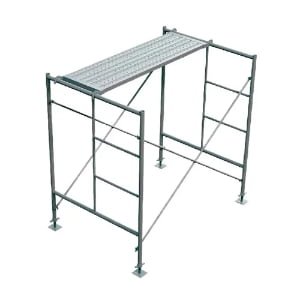
Frame scaffolding—also known as fabricated or sectional scaffolding—is one of the most widely recognized and frequently used scaffolding systems in the construction industry-3–. Its modular design consists of prefabricated welded frames connected by cross braces, creating a stable and reliable working platform-6. While system scaffolding often dominates conversations around complex or high-rise projects, frame scaffolding remains the preferred solution for a significant portion of construction work–. Understanding exactly when and why frame scaffolding should be deployed in large volumes is essential for project managers, contractors, and procurement teams looking to balance cost, efficiency, and safety.
The Core Advantages That Drive Widespread Use
Frame scaffolding owes its popularity to several fundamental strengths. First and foremost, it is highly cost-effective. Compared to system scaffolding, frame scaffolding is generally more economical to purchase and rent–-3. Its lower upfront equipment cost, combined with reduced labor requirements for assembly, makes it an attractive option for projects where budget constraints are a primary concern–. Frame scaffolding typically rents for $15–$30 per day, making it the budget workhorse that handles approximately 80% of residential and light commercial jobs–.
Second, frame scaffolding offers rapid assembly and disassembly. The simple frame-and-brace structure makes erection intuitive and fast-15. With fewer components to sort and handle, crews can set up frame scaffolding quickly after minimal training-15. Contractors report cutting assembly time by around 30% compared to older scaffolding techniques-62. This speed is particularly valuable for projects with tight schedules or those requiring frequent relocation of scaffolding across different areas of a job site.
Third, frame scaffolding provides excellent stability and safety when properly erected. The system typically includes guardrails, toeboards, and cross braces that enhance worker protection and reduce fall risks-6-62. When assembled in accordance with OSHA standards—including proper base plates, firm foundations, and adequate bracing—frame scaffolding delivers a secure working environment for multiple workers and their equipment–-6.
Key Scenarios for Large-Volume Frame Scaffolding Deployment
Frame scaffolding becomes the optimal choice—and is deployed in large quantities—under the following conditions:
1. Standardized, Rectilinear Building Layouts
Frame scaffolding is ideally suited for projects with simple, rectangular building geometries-3. Residential homes, apartment blocks, schools, office buildings, and retail centers with straightforward facades present the perfect application. The prefabricated frames stack neatly against flat walls, and cross braces lock into place with minimal customization. When a project features repetitive elevations and standard configurations, frame scaffolding delivers maximum efficiency-15. In such cases, deploying frame scaffolding across the entire building perimeter—often spanning hundreds or thousands of linear feet—is both practical and economical.
2. Low- to Mid-Rise Residential and Light Commercial Construction
Frame scaffolding remains the go-to solution for low- and mid-rise residential projects–. Industry experts note that frame scaffolding is perfect for projects under six stories-63. For buildings ranging from single-family homes to six-story apartment complexes, frame scaffolding provides all the necessary access without the added cost and complexity of system scaffolding. Small contractors particularly favor frame scaffolding because it is fast, easy to use, and does not add extra stress to tight schedules or budgets-63. When a contractor is managing multiple residential units or a medium-sized commercial development, ordering frame scaffolding in large volumes becomes a standard practice.
3. Projects Requiring Quick Mobilization and Short Durations
For short-term projects where speed is essential, frame scaffolding excels-3. Exterior painting, siding installation, roofing, window replacement, masonry repairs, and facade maintenance all benefit from the rapid setup and takedown that frame scaffolding offers-6–. When a project duration is measured in weeks rather than months, the ability to mobilize quickly and demobilize just as fast is critical. Large-scale renovation campaigns—such as repainting an entire apartment complex or recladding a commercial strip mall—often require massive quantities of frame scaffolding deployed simultaneously across multiple building faces.
4. Projects with Repetitive, Predictable Access Needs
When a construction project involves repetitive work patterns—such as bricklaying, stucco application, or exterior insulation finishing system (EIFS) installation—frame scaffolding provides consistent, reliable access–. The uniform frame heights and standard platform levels allow crews to work methodically up the building, knowing that each tier offers the same working conditions. This predictability reduces training time, minimizes errors, and accelerates overall project进度. For large-scale masonry projects, frame scaffolding is often referred to as “mason’s scaffolding” precisely because of its dominance in this application–.
5. Budget-Conscious Projects with Established Safety Protocols
When project budgets are tight, frame scaffolding becomes the default choice. Its lower equipment costs and reduced labor requirements translate directly into tangible savings–. For public works projects, school construction, affordable housing developments, and other publicly funded initiatives, frame scaffolding offers a proven, cost-effective access solution that meets all regulatory requirements. Furthermore, because frame scaffolding has been in use for decades, safety protocols are well-established and widely understood by construction crews, reducing the learning curve and associated risks-15.
Understanding the Limitations
While frame scaffolding can be deployed in large volumes across many project types, it is not suitable for every situation. Frame scaffolding offers moderate load capacity and lower height limits compared to system scaffolding-14. For high-rise buildings exceeding six stories, industrial facilities with heavy loads, or structures with complex, irregular geometries, system scaffolding—such as ringlock or cuplock systems—provides superior flexibility, load-bearing capacity, and adaptability-3-14. Frame scaffolding is also less adaptable to curved surfaces, obstacles like windows and corners, and structures requiring significant modification-3.
Conclusion
Frame scaffolding becomes the preferred choice for large-volume deployment when projects feature standardized layouts, low- to mid-rise heights, short durations, repetitive access needs, and tight budgets. Its cost-effectiveness, rapid assembly, and proven safety record make it indispensable for residential construction, light commercial work, and exterior renovation projects. Contractors and project managers who understand these parameters can confidently order frame scaffolding in large quantities, knowing they are making a sound investment in both efficiency and economy. While system scaffolding may dominate the headlines for complex and high-rise projects, frame scaffolding remains the quiet workhorse that keeps the construction industry moving—one frame, one brace, and one project at a time.