Steel supports are fundamental to modern construction, yet the terminology used to describe them varies significantly across different English-speaking countries and regions. This linguistic diversity can create confusion for international procurement teams, engineers, and contractors working on global projects. Understanding these regional differences is essential for effective communication and successful project execution.
What Are Steel Supports?
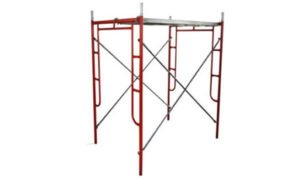
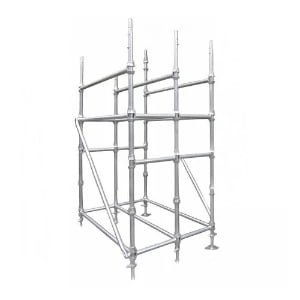
Before diving into regional terminology, it is important to clarify what steel supports encompass. In construction and structural engineering, steel supports refer to various steel components designed to resist compression, transfer loads, and provide temporary or permanent stabilization to structures–. These include vertical props, horizontal struts, bracing systems, and channel framing systems used in formwork, shoring, scaffolding, and structural framing applications-5.
The terminology varies not only between countries but also between different applications—what a contractor calls a support on one job site may be completely unfamiliar to a team from another region.
Vertical Steel Supports: Props and Shores
United Kingdom and Commonwealth
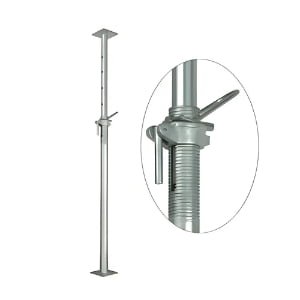
In the United Kingdom, the most recognizable term for an adjustable vertical steel support is the Acrow prop or BS prop-11–. This term originates from the Acrow brand, which became so dominant that the brand name turned into a generic term-11. The Acrow prop is a telescopic tubular steel prop used as a temporary support during building repair or alteration work-11. They are adjustable for height through both coarse and fine adjustments-11.
North America
In the United States and Canada, the same equipment is known by several different names. Common terms include jack post, adjustable post, telescoping prop, post shore, adjustable steel shore, or simply shore-11–. A Lally column is sometimes mistakenly used for this type of support, though it technically refers to a specific type of steel column filled with concrete-11–. On US construction sites, you are more likely to hear shoring post or adjustable steel shore than “Acrow prop”–.
Australia
Australian construction terminology tends to follow UK patterns, with Acrow prop being commonly understood and used–. However, Australian standards and technical documents often use more generic terms such as adjustable steel prop or construction prop–.
Europe
In continental Europe, terminology varies by language. In Germany, steel props are commonly referred to as Stahlstütze or Rohrstütze (steel prop or tube prop), while international contractors may use terms like construction prop, formwork prop, or telescopic prop–. Heavy-duty H-section steel supports are particularly prevalent in German and French construction, especially for deep foundation pit work in high-speed rail and subway projects–.
Asia
In Asian markets, terminology often blends local languages with English terms. In Japan, the term steel strut (スチールストラット) is used, though the Japanese construction industry has its own specific terminology for temporary supports–. In China, the term 钢支撑 (gāng zhī chēng) translates directly to “steel support,” while international projects may use steel prop or steel shore––. Korea and Japan commonly use H-shaped steel struts in construction, as opposed to the steel pipe struts more frequently seen in North America, Europe, and China–.
Horizontal Steel Supports: Struts and Wales
For horizontal steel supports used in trench shoring, excavation support, and formwork bracing, terminology also varies considerably.
Trench Struts
In the UK and Australia, trench strut is the standard term for horizontal adjustable steel supports used to brace the opposing faces of an excavation-11. In North America, these are often simply called struts or horizontal shores–. The design is similar to vertical props but with upturned corners on end plates to facilitate installation against timber walings-11.
Wales and Walers
A wale (also spelled waling) is a horizontal beam used to distribute loads from sheet piling or formwork to vertical supports–. In North America, the term waler is more common–. Steel channels or beams are typically used to construct walers, which work in conjunction with adjustable steel props or trench struts–.
Strut Channels: A Global Product with Many Names
Perhaps the most terminologically diverse steel support product is the strut channel—a cold-formed steel channel with a C-shaped or U-shaped profile, typically featuring regularly spaced perforations for bolted connections-3–.
In North America, this product is almost universally called strut channel or simply strut–. It is also commonly known by a variety of brand names that have become genericized, including Unistrut, Kindorf, SuperStrut, Flexstrut, and Metstrut-3–. The term 12 gauge standard or deep slotted channel is also widely used–.
In the UK and Australia, the product is frequently called Unistrut—again after the dominant brand—or referred to as a channel support system–. Other common names include slotted channel, mounting rail, and steel strut-5.
Brand Names Becoming Generic Terms
A notable phenomenon in steel support terminology is the tendency for dominant brand names to become generic terms. This is particularly evident with Acrow prop in the UK– and Unistrut in global construction markets–. Other examples include Lally column in the US-11 and Kindorf in North American electrical and mechanical trades-3.
This brand-to-generic transition can create confusion for international procurement. A contractor from the UK requesting an “Acrow prop” may receive blank looks from a US supplier who knows the product only as an “adjustable steel shore.”
Regional Preferences Summary
| Region | Vertical Support | Horizontal Support | Strut Channel |
|---|---|---|---|
| UK / Commonwealth | Acrow prop, BS prop | Trench strut | Unistrut, channel support |
| USA / Canada | Jack post, shore, post shore | Strut, horizontal shore | Strut channel, Unistrut |
| Australia | Acrow prop, steel prop | Trench strut | Unistrut |
| Germany | Stahlstütze, formwork prop | Strebe, Aussteifung | Kanal, Strut-Kanal |
| Asia | Steel prop, steel shore | Steel strut | Unistrut, slotted channel |
Why Terminology Matters
For international construction projects, understanding regional terminology is not merely a matter of linguistic curiosity—it has practical implications:
-
Procurement accuracy: Ordering the wrong product due to terminology confusion can cause costly delays.
-
Safety compliance: Different regions have different standards and certification requirements for steel supports–.
-
Engineering coordination: Clear communication between design teams and site personnel depends on shared terminology.
-
Documentation and standards: Every country has its own standards for steel support systems—ASTM in the US, EN standards in Europe, and local codes in Asia–.
Conclusion
The terminology for steel supports reflects the rich diversity of construction practices across the globe. While the underlying engineering principles remain the same, the words used to describe these essential components vary widely—from the UK’s “Acrow prop” to America’s “adjustable steel shore,” from Australia’s “trench strut” to Germany’s “Stahlstütze.”
For professionals working in international construction, developing a working knowledge of these regional terms is essential. Whether you are specifying steel supports for a project in London, procuring them for a site in Texas, or coordinating installation in Singapore, understanding what your counterparts call these components will save time, reduce errors, and ensure successful project delivery. In an industry where precision matters, getting the terminology right is the first step toward getting the job done right.