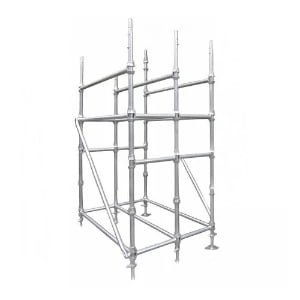
Scaffolding props, also known as adjustable steel props or shoring props, are indispensable temporary support elements in modern construction. Designed as telescopic steel tubes with a threaded adjustment mechanism, they provide vertical support to formwork, beams, slabs, and other structural components during the building process. Their simplicity, strength, and reusability make them a preferred choice across residential, commercial, and civil engineering projects.
Primary Role of Scaffolding Props
The main function of scaffolding props is to transfer loads safely from the structure above to the ground or a stable base. By adjusting the inner tube’s height via a nut and pin system, workers can achieve precise elevation alignment, accommodating different floor heights or uneven surfaces. This adjustability allows props to support wet concrete until it cures, hold heavy beams during installation, or reinforce existing structures during renovation.
Beyond simple vertical support, scaffolding props contribute significantly to site safety. When properly installed with adequate spacing and base plates, they prevent premature collapse of formwork or shoring systems. They also act as stabilizing elements in complex scaffolding assemblies, reducing the risk of lateral movement. Because they are steel-based, they offer high load-bearing capacity, typically ranging from 10 kN to over 30 kN per prop, depending on the model and height.
Another key role is facilitating efficient work cycles. Unlike timber props, steel props can be quickly extended or retracted, installed by a single worker, and reused hundreds of times with minimal maintenance. This speed and reusability lower material costs and reduce construction waste, aligning with green building practices.
Scope of Application
Scaffolding props are used in a wide range of construction scenarios:
-
Concrete Slab and Beam Formwork – They are the backbone of traditional and modular formwork systems, supporting plywood or metal forms during concrete pouring. Applications include residential floors, commercial basements, parking garages, and industrial slabs.
-
Bridge Construction and Viaducts – Large‑span bridges require heavy‑duty props to support precast segments or cast‑in‑place decks. Props with higher load ratings and corrosion‑resistant finishes are specified for such infrastructure projects.
-
Renovation and Retrofitting – When strengthening old buildings or adding new floors, adjustable props temporarily hold beams or lintels while structural modifications take place. They are also used to prop up cracked walls during underpinning.
-
Temporary Shoring and Excavation Support – In deep excavations or trench works, props combined with walers resist earth pressure and prevent collapse, ensuring worker safety.
-
Event and Industrial Platforms – Beyond construction, props support temporary stages, grandstands, or heavy machinery during maintenance shutdowns.
-
Emergency Repair – After natural disasters like earthquakes, props quickly stabilize compromised structures, allowing safe inspection and repair.
Advantages That Broaden Their Use
The widespread adoption of scaffolding props stems from several benefits: high strength‑to‑weight ratio, easy transport, adjustable height (from about 1.5 m up to 5 m or more), compatibility with other shoring accessories (forks, U‑heads, base plates), and compliance with international standards such as EN 1065. These features make them suitable for both simple slab support and complex multi‑level falsework.
Conclusion
Scaffolding props play a vital role in ensuring structural stability, worker safety, and construction efficiency. Their scope extends from small housing sites to massive bridges and rescue operations. As construction continues to demand safer, faster, and more sustainable methods, the adjustable steel prop remains a fundamental tool – reliable, versatile, and indispensable.