Executive Summary
Scaffolding in China has undergone a remarkable four-phase evolution over the past seven decades, transforming from traditional bamboo and wood structures into sophisticated steel systems that power the world’s largest construction market. This transformation has been driven by urbanization, industrialization, safety regulations, and technological innovation. Today, China stands as the world’s largest scaffolding market, accounting for 21% to over 34% of global market share, valued at approximately RMB 156.65 billion (US$ 21.5 billion) as of 2025, serving a booming construction sector that continues to expand through urban renewal and green building initiatives.
📊 The Four Phases of Scaffolding Development in China
🔹 Phase One: The Bamboo and Wood Era (Pre-1949 to 1960s)
For millennia, Chinese construction relied on regional materials following the “South Bamboo, North Wood” principle. Bamboo scaffolding has a documented history spanning over 2,000 years, with early evidence dating to the Han Dynasty (202 BCE – 220 CE), where entertainers performed atop temporary bamboo structures called “pengge,” and is even depicted in the Song Dynasty masterpiece “Along the River During the Qingming Festival” (1085–1145) by Zhang Zeduan [8†L7-L8].–
Before 1949 and into the early 1950s, construction scaffolding in China was built almost exclusively from bamboo or wood. This approach suited a nation with abundant labor but scarce industrial materials, and residential buildings rarely exceeded six to seven stories. Skilled craftsmen, trained through apprenticeship systems, used asphalt-soaked hemp ropes to bind bamboo poles into stable structures based on observation and experience [12†L25-L32].-5
🔹 Phase Two: The Steel Revolution (1960s – 1980s)
The 1960s marked a pivotal shift as China began promoting fastener-type steel pipe scaffolding. Steel offered significant advantages over bamboo: it was disassembling flexible, easy to carry, and demonstrated strong commonality [6†L25-L27].-2-1
China’s steel industry was still nascent—annual production was only 1.35 million tons in the early 1950s, relying heavily on Soviet technology for 156 major industrial projects. As production capacity grew, steel scaffolding gradually replaced bamboo and wood nationwide, improving load-bearing capacity and construction safety while standardizing and industrializing the scaffolding industry [6†L5-L6].-58-1
🔹 Phase Three: The Multi-Functional Expansion (1980s – 2000s)
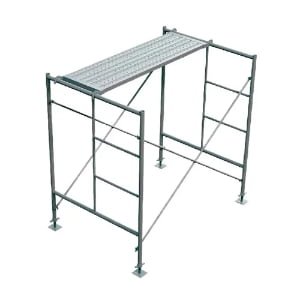
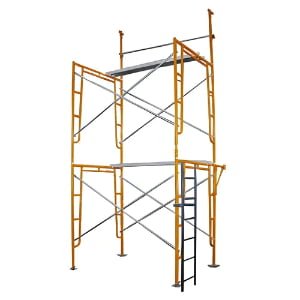
The 1980s ushered in a new era of modernization. China began introducing advanced scaffolding systems from abroad, including door-type (portal) scaffolding and bowl-buckle (cup-lock) systems [10†L2-L3].-59
Door-type scaffolding saw widespread application in many domestic projects with good results, though quality issues limited its broader adoption. Most domestic manufacturing was based on foreign designs. Bowl-buckle scaffolding became the most widely adopted new type, though its usage remained concentrated in specific regions and projects. The late 1980s also saw the emergence of proprietary Chinese innovations like the ringlock system, which would later dominate the market [7†L14-L16].-4
By 2013, China had over 100 professional scaffolding manufacturers, concentrated in Wuxi, Guangzhou, Qingdao, and other industrial hubs. Technologically, domestic manufacturers already possessed the capability to produce a wide variety of advanced scaffolding types [10†L14-L17].-59
🔹 Phase Four: The Innovation Era (2000s – Present)
The 21st century witnessed explosive growth in high-rise and large-span construction, driving demand for more sophisticated systems. The ringlock (disc-buckle) scaffolding system, which uses a unique disc connector for fast assembly, emerged as the dominant solution starting around 2010 [13†L14].-1
From 2010 onward, China developed over 900 enterprises engaged in ringlock scaffolding production, leasing, and related services, with the total market inventory exceeding 20 million tons. The system offers significant advantages: construction speed is simple and fast, maneuverability is high, and safety is reliable. Government policies began mandating the use of ringlock systems and banning traditional fastener-type cantilever scaffolding in many regions, further accelerating adoption [13†L17-L18].-1
Aluminum formwork and climbing scaffolds also emerged as key technologies, with the government actively promoting these systems as part of its green building agenda [13†L21-L22].–
🔬 Key Technological Innovations
China’s scaffolding industry has achieved several significant innovations:
-
Ringlock Systems: Now the industry standard, offering 2x improvement in assembly/disassembly efficiency and 33% reduction in steel consumption compared to traditional fastener systems [15†L7-L8]
-
Disc-Buckle Scaffolding: Driven by government safety regulations and policies since 2017, this system became widely mandated across construction sites nationwide [9†L49-L54]
-
Aluminum Formwork: Increasingly favored for urban renewal projects, offering lightweight properties and high-reuse capabilities—critical for renovation work where noise and vibration constraints apply [18†L12-L13]
-
Climbing Scaffolds: Introduced proprietary designs for supertall building construction in stadiums, convention centers, and bridge towers [14†L8-L10]
-
Protective Sheeting & Enclosures: Advanced netting systems to prevent debris fall and enhance worksite safety
-
High-Strength Steel Alloys: New materials enabling lighter yet stronger structural components
📈 Market Size and Growth Trajectory
China is the world’s largest scaffolding market, commanding approximately 21% to over 34% of the global market share [16†L15-L16].–
| Key Metric | Value |
|---|---|
| Global scaffolding market (2024) | US$ 8.511 billion |
| Global scaffolding market (2031 projection) | US$ 13.15 billion |
| Global scaffolding market (2032 projection) | RMB 144.51 billion (US$ 20.7B) |
| China scaffolding platform market (2025) | RMB 156.65 billion (US$ 21.5B) |
| China formwork + scaffolding market (2026 est.) | RMB 600 billion (US$ 87.6B) |
| Global market CAGR (2026-2032) | 2.7–7.88% |
| China market CAGR (2025-2029) | 1.61–1.84% |
Data sources: QYResearch, MMG, 6W Research, 168 Report
The China Scaffolding Technology Market is witnessing substantial growth, driven by rapid urbanization and infrastructure development [1†L1-L10].-43–
🏭 Manufacturing Hubs and Industry Leaders
China’s scaffolding industry has evolved into specialized regional hubs:
| Region | Specialization |
|---|---|
| Wuxi / Jiangsu | Advanced formwork systems, Lianggong Formwork, Tangshan Wufang Industry |
| Guangzhou | High-precision automated manufacturing |
| Qingdao / Tianjin | GOWE Group, Wellmade, major export hubs |
| Zhejiang | Interior scaffolding (e.g., Zhejiang Gengyuan, capturing 70% of North American indoor scaffolding market) |
Leading Chinese manufacturers include: ADTO Group, Sunshine Enterprise, XMWY, KHK Scaffolding, Rizhao Fenghua, Tianjin Gowe, Rapid Scaffolding, Youying Group, Lianggong Formwork, and Tangshan Wufang Industry, which produces ringlock systems, frame systems, aluminum towers, shoring props, steel formwork, and LVL boards [16†L19-L20].–
📊 Regional “South Bamboo, North Wood” Heritage
China’s traditional scaffolding approach was shaped by the “South Bamboo, North Wood” principle—a pragmatic response to regional resource availability that endured for centuries [0†L15-L16].
| Region | Traditional Material | Characteristics |
|---|---|---|
| Southern China | Bamboo | Flexible, grows in 3–5 years, lightweight, hollow structure |
| Northern China | Wood | Stiffer, more abundant in northern forests |
Despite steel dominance, bamboo scaffolding persists in specific niche applications today: as a non-conductive option near high-voltage power lines, for heritage building preservation, and in regions like Hong Kong where tradition and regulation maintain its use. Bamboo remains cheaper than steel on a per-unit basis, ensuring continued demand in certain contexts [13†L15-L16].
🏗️ Urbanization as the Primary Growth Catalyst
Beginning in the 1980s, and accelerating from the 1990s onward, China entered a period of unprecedented urbanization, with construction scale expanding explosively. This created massive demand that bamboo systems could no longer satisfy [12†L33-L37].
Today, the government continues to drive industry modernization:
| Initiative | Impact |
|---|---|
| Safety Technical Standards for Socket-type Disc Steel Tube Scaffolding (JGJ 231) | Mandated use of ringlock systems |
| Nationwide bans on fastener-type cantilever scaffolding | Phased out older, less safe systems |
| “Dual Carbon” goals (carbon peak 2030 / carbon neutrality 2060) | Promotes green manufacturing and low-carbon technologies |
| Urban renewal national strategy (2025 Government Work Report) | ~50,000 old residential communities scheduled for renovation |
These policies have not only improved safety but also created a massive market for scaffolding in non-new-build sectors, including renovation and reinforcement projects [18†L10-L14].-57
🌱 Current Trends Shaping the Industry (2025–2026)
Several key trends are reshaping China’s scaffolding landscape:
-
Ringlock and climbing scaffold demand continues to grow while aluminum formwork and attached lifting protection platforms see some decline [6†L18-L19].–
-
Urban renewal becomes major growth driver: Renovation projects require lightweight, modular, high-turnaround, low-noise scaffolding solutions, with the share of non-residential applications expected to exceed 35% of the market [18†L12-L13]
-
Intelligent and digital transformation lags: The industry still faces challenges including traditional management models, insufficient digital development, inconsistent quality standards, intense disordered competition, and persistent payment issues with long accounts receivable cycles [7†L5-L7]
-
Green and low-carbon compliance: As mandatory standards like the “General Code for Building Energy Efficiency and Renewable Energy Utilization” take effect, the scaffolding industry is accelerating toward intelligent, green, and service-oriented models [18†L14-L15]
⚠️ Persistent Industry Challenges
Despite impressive growth, the scaffolding industry in China faces several structural challenges:
-
Intense, disordered competition – Over 900 enterprises crowd the ringlock market, driving down prices and margins
-
Inconsistent quality standards – Enforcement of manufacturing specifications remains uneven
-
Payment cycle pressures – Long accounts receivable periods (typically 6–12 months) strain cash flow for suppliers
-
Digitalization gap – Low levels of smart technology adoption compared to other industrial sectors
-
Skilled labor shortage – Traditional craftsmanship knowledge is being lost as older workers retire [7†L5-L7]
🔮 Looking Ahead (2026–2035)
The future of Chinese scaffolding is being shaped by five powerful forces:
-
Continued urbanization and infrastructure investment
-
Upgrading safety regulations and enforcement
-
Technology integration (IoT sensors for load monitoring, BIM for design optimization)
-
Green material innovation (recycled plastics, lightweight alloys)
-
Service-based business models (design-build-lease-maintain)
China’s scaffolding market is poised for continued expansion, with the global market expected to reach RMB 144.51 billion by 2032, growing at a CAGR of 7.88% [1†L40-L42]. Urban renewal and renovation projects will account for over 35% of the domestic formwork and scaffolding market by 2026—a fundamental shift in demand patterns that will drive further innovation in lightweight, modular systems [18†L12-L13].
💎 Conclusion
The story of scaffolding in China is ultimately one of remarkable adaptation. From ancient bamboo structures depicted in Song Dynasty paintings to the high-strength steel ringlock systems that dominate modern skylines, China’s scaffolding evolution mirrors the nation’s broader journey from an agricultural society to an industrial powerhouse. With the world’s largest construction market, government-driven safety and green initiatives, and a dynamic ecosystem of over 900 manufacturers and service providers, China’s scaffolding industry is not just keeping pace with global standards—it is increasingly setting them. The challenge ahead lies not in technology but in execution: standardizing quality, embracing digital transformation, and navigating the transition from new-build dominance to an era of urban renewal and green retrofitting.
For more information on China’s scaffolding industry developments or to verify the latest supplier metrics and market data, consult official industry reports from QYResearch, IndexBox, or the China Formwork and Scaffolding Association (CNCFSA).