How To Choose The Right Materials For Column Formwork
Selecting the appropriate formwork material for concrete columns depends on project requirements, budget, and environmental conditions. Below is a comprehensive guide to help you make an informed decision:
1. Material Comparison
| Material | Pros | Cons | Best For |
|---|---|---|---|
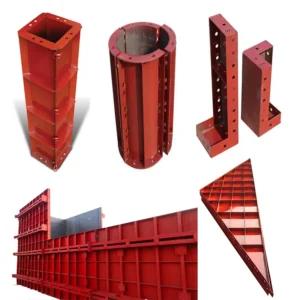
| Steel | – High strength (up to 60 kN/m²) – Reusable 40+ times – Precise finishes |
– High initial cost – Heavy (requires machinery) – Corrosion risk |
High-rise buildings, bridges, heavy loads |
| Aluminum | – Lightweight (easier handling) – Fast assembly – Reusable 50-100 times |
– Lower load capacity – Higher cost than wood/plastic |
Residential projects, repetitive work |
| Wood | – Low cost – Flexible for complex shapes – Easy to cut/modify |
– Short lifespan (5-10 uses) – Prone to moisture damage |
Small-scale, low-budget projects |
| Plastic | – Corrosion-resistant – Smooth surface finish – Lightweight |
– Low strength – Limited reusability (20-30 times) |
Curved columns, temporary structures |
2. Key Selection Factors
- Load Requirements: Steel is ideal for high-pressure applications (e.g., bridge columns), while aluminum or plastic suits lighter loads.
- Reusability: Steel and aluminum offer long-term cost savings despite higher upfront costs.
- Project Scale:
- High-rise: Steel or aluminum for speed and durability.
- Residential: Aluminum or plastic for cost efficiency.
- Bridges: Steel for strength and precision.
- Environment: Humid conditions favor corrosion-resistant materials (aluminum, plastic, or epoxy-coated steel).
- Budget: Wood is cheapest for one-time use; steel/aluminum reduces long-term costs through reusability.
3. Recommended Materials By Project Type
- High-Rise Buildings: Steel (modular systems) or aluminum (climbing formwork).
- Bridge Columns: Steel formwork with adjustable frames for tapered shapes.
- Residential Construction: Aluminum or plastic for faster, economical builds.
4. Maintenance Tips
- Steel: Apply epoxy coatings after each use to prevent rust.
- Aluminum: Clean regularly to avoid chemical buildup.
- Wood: Replace warped panels promptly.